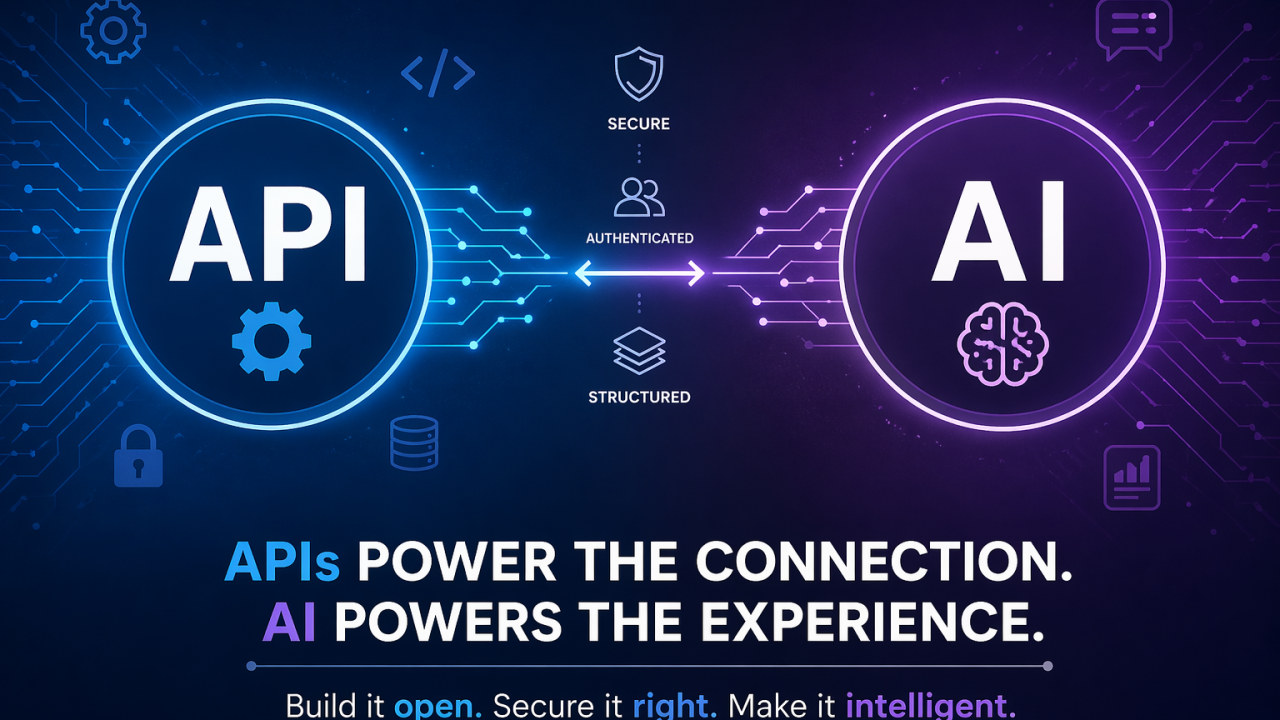
Most of us are already using AI in some way: better search, cleaner emails, faster spreadsheets.
Some of us are going further, putting AI in front of automation. We’ve now built our third agent that can call APIs, trigger workflows, and work through data sets that would normally take days to analyze.
And here’s what it has taught me:
No matter how well we design our UI—clean pages, perfect charts, the “right” data—there will always be a user who wants something we did not anticipate.
Building another feature for every edge case does not scale.
Our shift: design the product for AI along with users
- Build APIs into the product from the start that AI can call.
- Secure them properly with roles, authentication, and clear boundaries that protect users while enabling them.
- Structure the APIs—and go so far as to write use-case instructions—so they are easy for AI to understand and use. Users can effectively take our AI instructions and pass them into theirs.
Increasingly, users will not navigate your product in the way you expect. Some will find AI more engaging. They will simply ask for what they need.
Automation removes the work. AI removes the friction.
I would love to know what other product owners and development teams are experiencing as they build products to work more closely with AI. Do you keep access internal to your own AI tools, or are you prepared to expose data safely to your users’ AI?
Originally published on LinkedIn.